Artificial intelligence is already transforming healthcare by improving efficiency, reducing administrative burdens, and much more. However, the benefits of AI must be balanced against the responsibility to protect PHI and maintain public trust. Compliance frameworks such as HIPAA, SOC 2, and ISO 27001 exist because healthcare organizations handle this data. These standards help establish safeguards for privacy, security, accountability, and risk management.
One insight I have developed through my research and professional experiences is that compliance is not simply about following rules. Effective compliance programs are designed to protect people. When organizations fail to prioritize privacy and security, the consequences can include data breaches, loss of trust, regulatory penalties, and harm to patients whose information can be exposed.
The rise of AI introduces new questions that existing legal frameworks are still working to address. Healthcare organizations must consider issues like data governance, algorithmic bias, and transparency. While AI systems can process information at remarkable speed, organizations must ensure that efficiency does not come at the expense of privacy. The challenge is not whether AI should be used in healthcare, but how it can be implemented responsibly.
What has surprised me most is the complexity behind the systems that support compliance and privacy. Before studying these issues more closely, I viewed compliance primarily as a legal obligation. Today, I see it as a critical component of innovation. Strong privacy and security practices do not slow progress; they create the foundation that allows organizations to adopt new technologies. As AI continues to evolve, I believe the most successful healthcare organizations will be those that treat ethics, compliance, and innovation as complementary goals rather than competing priorities.
I use artificial intelligence as a research and planning tool, not as a substitute for critical thinking. I fact-check AI outputs, verify information through independent sources, and only use AI in areas where I can evaluate its accuracy.
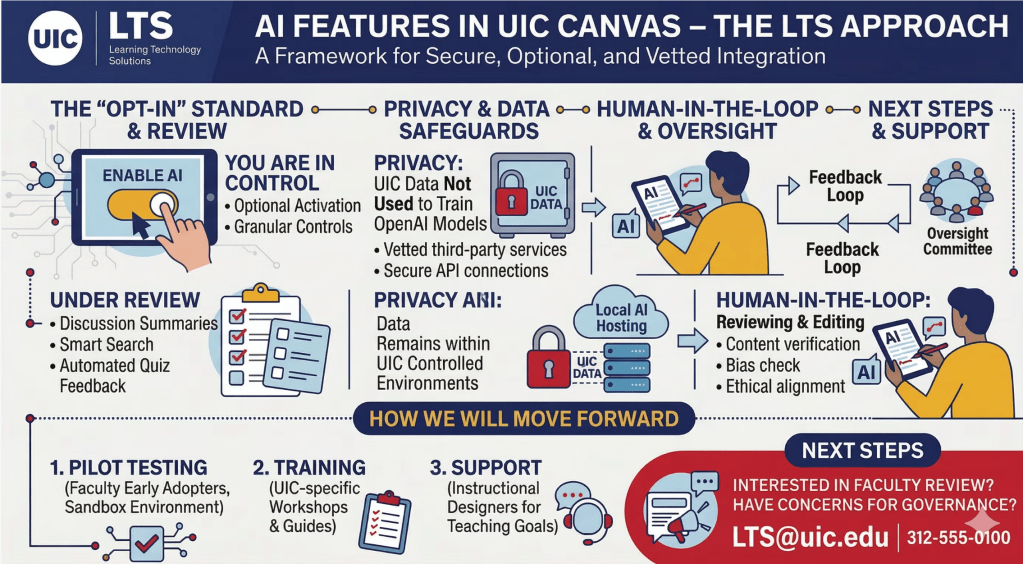
As President of the University of Illinois Chicago Mock Trial Organization and in other leadership roles, I have used AI tools such as Claude to organize projects, create task assignments, develop event timelines, and improve team communication. For example, I used AI to research how collegiate mock trial organizations structure their constitutions and then independently drafted a constitution for the UIC Mock Trial Organization based on that research. I have also used AI to develop project plans, assign responsibilities, identify scheduling conflicts, and streamline outreach efforts for student organizations.
Through UIC’s Google AI for Education Accelerator Program and participation in the AI Leaders cohort, I have expanded my understanding of responsible AI use and explored how AI can support research, writing, project management, and organizational leadership. These experiences have reinforced my belief that AI is most effective when used to improve efficiency, organization, and decision-making while maintaining human oversight and accountability.
What is a practical example of AI use?
A practical example of my use of artificial intelligence was during the development of governance documents for a student organization. I used AI to conduct comparative research on mock trial constitutions, identifying common structural components, frameworks, membership rules, and procedural formatting used across established collegiate teams. This allowed me to understand not only what content needed to be included, but also how constitutional documents are typically organized to ensure consistency.
After gathering this foundational understanding, I independently drafted a constitution for the UIC organization, applying the structural insights I had researched while making all substantive decisions, language choices, and organizational determinations myself. The final document reflected my own authorship and reasoning, with AI serving as an informational and organizational research tool.
Wenixo Work
Wenixo is a AI Healthcare Company that’s building personalized software & hardware designed to support clinicians, simplify documentation, and restore focus to patient care.
Our goal is to create technology that works quietly in the background of clinical environments, reducing administrative burden while ensuring that clinicians remain fully in control of their workflow and data.
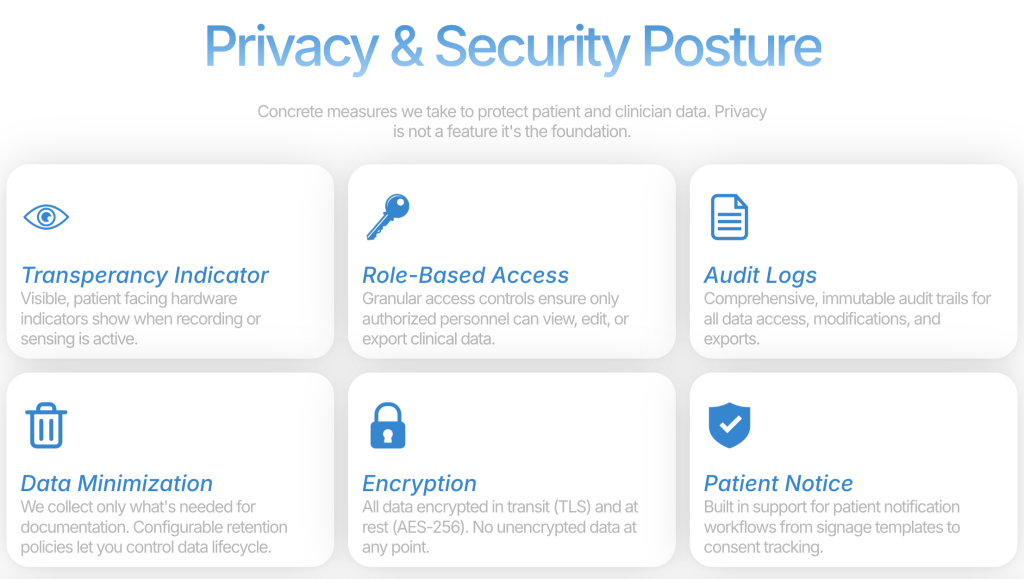
We handle PHI (Protected Health Information) throughout the entire process and while working with clinics. We have internal policies to ensure that PHI is not being inputted into AI systems to ensure confidentiality and compliance with HIPAA, SOC 2, and more.
 harrisonAILEADERS